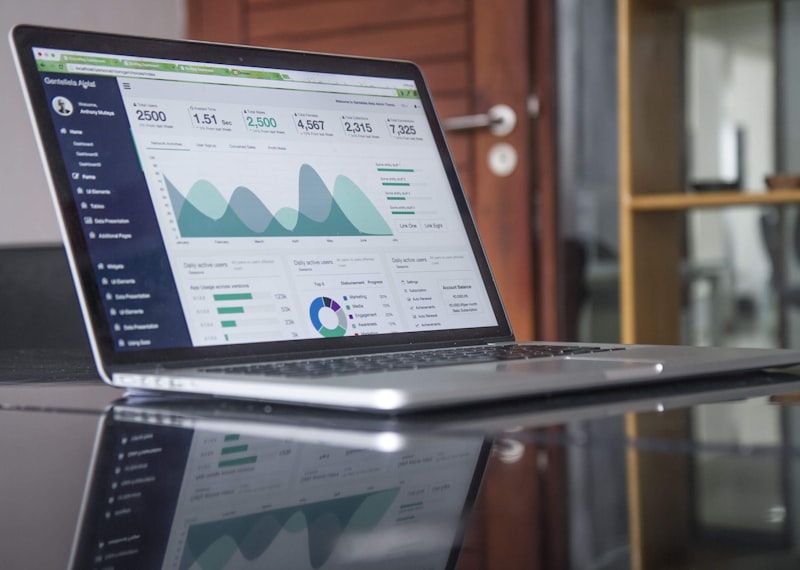
If you asked the average small business owner which numbers they track, you'd hear some version of the same answer: revenue, maybe expenses, possibly a social media follower count. That's it.
The problem isn't laziness — it's that nobody ever told them which numbers actually predict growth and which are just noise. Revenue tells you what happened. The right KPIs tell you what's about to happen and why.
This post gives you the 10 KPIs that matter most for a small business, the exact formula for each one, and a realistic plan for putting them to work — even if you're currently tracking nothing at all.
What Makes a KPI Worth Tracking?
Not every metric deserves a spot on your dashboard. Before adding a number to your weekly review, it should pass three tests:
- 1It's actionable — if the number goes wrong, you know exactly what to do differently.
- 2It's leading, not lagging — it signals future performance, not just what already happened.
- 3You can move it — if you have no lever to pull on a metric, measuring it is theater.
A vanity metric feels good but doesn't change your decisions. A KPI should make you uncomfortable when it dips — because you know exactly what that dip is costing you.
The 10 KPIs Every Small Business Should Track
Financial Health
Revenue Growth Rate
((This Period Revenue − Last Period Revenue) ÷ Last Period Revenue) × 100Raw revenue hides whether you're actually accelerating. A 10% month-over-month growth rate compounded is transformative; flat or declining growth is an early warning before it shows up as a crisis.
Gross Profit Margin
((Revenue − Cost of Goods Sold) ÷ Revenue) × 100This is your business model health check. A low gross margin means you're working hard to make thin money — any operational hiccup will send you negative. Track it by product line, not just in aggregate.
Operating Cash Flow
Net Income + Non-Cash Expenses − Changes in Working CapitalProfitable businesses go under because of cash flow problems, not income statement problems. If your operating cash flow is negative while profit looks fine, you have a collections or inventory problem that needs immediate attention.
Customer Economics
Customer Acquisition Cost (CAC)
Total Sales & Marketing Spend ÷ Number of New Customers AcquiredIf you don't know what it costs to acquire a customer, you can't know whether your marketing is profitable. Track this by channel — your Facebook CAC and your word-of-mouth CAC tell completely different stories.
Customer Lifetime Value (CLV)
Average Order Value × Purchase Frequency × Average Customer LifespanThis is the number that tells you how much you can afford to spend on acquisition. A customer worth $2,000 over their lifetime changes how aggressively you should compete for them versus one worth $80.
CLV : CAC Ratio
Customer Lifetime Value ÷ Customer Acquisition CostThe single most important ratio in your business. A ratio below 1:1 means you're paying more to acquire customers than they're worth. A ratio above 3:1 is the target for a healthy, scalable business.
Customer Churn Rate
(Customers Lost in Period ÷ Customers at Start of Period) × 100Acquiring a new customer costs 5–7× more than retaining an existing one. A 10% monthly churn rate means you're replacing your entire customer base roughly every 10 months — just to stay flat. Small improvements in retention have an outsized impact on growth.
Sales & Marketing Performance
Conversion Rate
(Number of Conversions ÷ Total Visitors or Leads) × 100A higher conversion rate means you're getting more revenue from the traffic or leads you already have — no additional spend required. Track this at each stage of your funnel: website visitor → lead → proposal → customer.
Average Order Value (AOV)
Total Revenue ÷ Number of OrdersIncreasing AOV by 15% has the same revenue impact as growing your customer base by 15% — but it's usually far cheaper to achieve. Upsells, bundles, and minimum order thresholds are all AOV levers.
Customer Satisfaction
Net Promoter Score (NPS)
% Promoters (9–10 rating) − % Detractors (0–6 rating)NPS is the leading indicator for referral volume and retention. A high NPS predicts organic growth; a declining NPS predicts churn and negative word-of-mouth — often months before it shows up in revenue.
How to Start Tracking These KPIs This Week
You don't need a sophisticated BI platform to get started. Here's a realistic ramp:
- 1Week 1 — Pick three KPIs from the list above. Revenue Growth Rate, Gross Profit Margin, and Churn Rate are good anchors for most businesses. Pull the last 3 months of data and calculate your baseline.
- 2Week 2 — Build a simple dashboard. A Google Sheet with one tab per KPI and a chart showing the trend over time is enough. The goal is visibility, not sophistication.
- 3Week 3 — Set a weekly review cadence. Block 20 minutes every Monday to update your numbers and ask one question: what moved and why?
- 4Month 2 — Add more KPIs as you build the habit. Once reviewing numbers feels natural, layer in CAC, CLV, and Conversion Rate.
The best KPI system is one you actually use. A simple spreadsheet you review every Monday beats an elaborate dashboard you open three times a year.
The Most Common KPI Mistakes Small Businesses Make
- Tracking too many metrics at once. More than 5–7 KPIs on a weekly dashboard and nothing gets the attention it deserves. Fewer, better-understood numbers win.
- Looking at totals instead of trends. This month's revenue number is almost meaningless in isolation. The trend over 6–12 months is what tells a story.
- Ignoring unit economics. Aggregate profit can look fine while individual products or customer segments are actively losing money. Always segment your KPIs.
- Setting no targets. A KPI without a benchmark is just a number. Define what "good" looks like for your business, then measure against it.
- Only reviewing when something feels wrong. By the time a problem is visible, it's been building for weeks or months. Regular review is how you catch issues while they're still cheap to fix.
What To Do With the Numbers
KPIs are only valuable when they drive decisions. Each week, ask these three questions about your numbers:
- What improved? Understand why so you can repeat it.
- What declined? Form a hypothesis about the cause and test it.
- What's the one metric that, if I moved it 10% next month, would have the biggest impact on the business?
That last question is where the leverage is. Most businesses have one or two bottleneck metrics where small improvements compound quickly. Your job is to find yours and focus there.
Getting Help Setting This Up
If you're starting from scratch — no clean data, no dashboard, no clear picture of which numbers are reliable — getting set up correctly from the beginning saves months of rework. My KPI dashboards and reporting services help Hamilton, Ohio small businesses and e-commerce brands build the frameworks, automated reporting, and metrics that actually drive growth.
The first conversation is free and comes with no obligation. If you leave with a clearer picture of what to measure and why, that's a win regardless of what we do next.